3rd Women in Photochemistry Symposium: Wednesday 4 March 2026

You are invited to our 3rd Women in Photochemistry Symposium on Wednesday 4 March 2026, in the Department of Chemistry, University College London, 20 Gordon Street, London WC1H 0AJ, UK. 

The symposium is timed to be in the week before International Women’s Day 2026 (Sunday 8 March). It is co-sponsored by UCL Chemistry, and EPSRC UPDICE and COSMOS Programme Grants.

Marsha Lester, Maria Sanz, and Susannah Bourne-Worster will talk about their research and share insights into their career paths, including challenges that they have faced and overcome, and tips for aspiring early career researchers. The symposium will be followed by a Q&A session and a networking event. 

Programme

1:10 PM Welcome

1:15 PM Susannah-Bourne-Worster (University of Durham, UK) Adventures in modelling light-activated processes in biology

2:00 PM Maria Sanz (King’s College London, UK) Revealing molecular architecture with rotational spectroscopy

2:45 PM Tea

3:15 PM Marsha Lester (University of Pennsylvania, USA) Photo-induced dynamics of reaction intermediates in atmospheric chemistry

4:00 PM Q&A

4:45 PM Networking and drinks reception

5.45 PM Close

Attendance is free, but places are limited and we would like to have an idea of numbers for catering purposes. If you would like to attend, please register here: https://www.eventbrite.co.uk/e/women-in-photochemistry-symposium-2026-tickets-1981855679688?aff=oddtdtcreator

Professor Helen Fielding
Dr J Michael Hollas

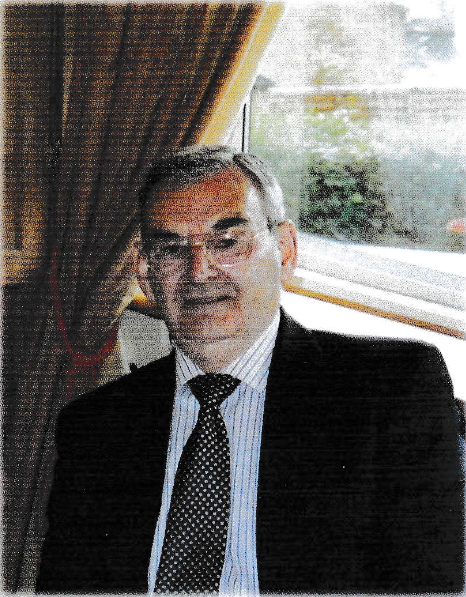
The Spectroscopy and Dynamics Group (SDG) of the Royal Society of Chemistry (RSC) notes the passing of Mike Hollas on 20 March 2025. Mike was a stalwart of the UK molecular spectroscopy community and a great supporter of the SDG. 

Mike was born in 1934 and was educated at Giggleswick School, then Heckmondwike Grammar School in Yorkshire prior to undergraduate studies at University College London (UCL), from whence he graduated with a first class honours degree in 1956. He remained at UCL for postgraduate research, exploring the electronic spectroscopy of gas phase aromatic molecules (benzene, naphthalene) with David Craig, and duly gained his PhD in 1959. Mike then embarked on postdoctoral research at the National Research Council in Ottawa – a well-trodden path for aspiring spectroscopists at that time – before being appointed to a Lectureship in Chemistry at the University of Reading in 1964. Mike was subsequently promoted to Senior Lecturer and to Reader and served the University of Reading for 32 years up to his retirement in 1996. 

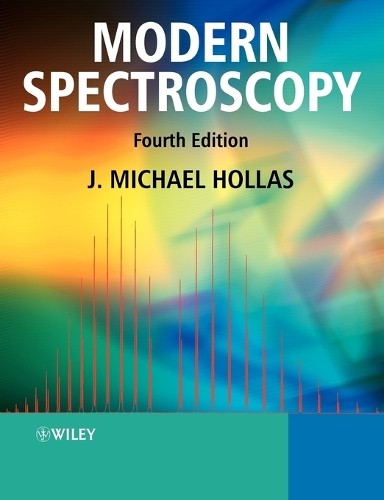
Mike and his students published more than 100 scientific papers devoted to aspects of molecular electronic spectroscopy. Mike will, however, probably be best known among current SDG members for his textbooks. The first, Symmetry in Molecules, was published by Chapman and Hall in 1972. A German language version followed in 1975. High Resolution Spectroscopy, an advanced level tome, first appeared in 1982 (published by Butterworths) and an acclaimed more-undergraduate-focussed book Modern Spectroscopy followed (Wiley, 1st edition 1987, 2nd edition 1991, 3rd edition, 1996).

‘Retirement’ gave Mike time to polish and update these texts further – the 2nd edition of High Resolution Spectroscopy appeared in 1998 (now published by Wiley) and the 4th edition of Modern Spectroscopy appeared in 2004. Mike also found time to write an RSC primer Basic Atomic and Molecular Spectroscopy, in 2002. Mike continued to support the SDG long after his retirement, and for many years generously donated copies of his major texts as prizes to be awarded to early career researchers judged to have given the most meritorious poster presentations at the annual SDG meeting. Away from spectroscopy, Mike joined the Henley Volunteer Bureau in 1998, became their fundraising officer the following year, and served as a Henley Volunteer Driver (providing transport for those unable to use public transport who need to attend essential medical appointments in the Henley-on-Thames area) through till July 2021. More mature members of the SDG will remember Mike fondly, as an exceptionally knowledgeable spectroscopist and a kind and patient gentleman.  

Text by Prof. Mike Ashfold FRS

Announcing the Faraday Community poster symposium 2025

The Faraday Community for Physical Chemistry is proud to bring together outstanding PhD students, post-doctoral researchers, and early-career scientists working in industry for the third Faraday Community poster symposium.
The Faraday Community poster symposium provides a fantastic opportunity to: 

  • Develop key skills vital for your future career.
  • Network with peers and senior researchers in academia and industry.
  • Benefit from careers advice; get the advice and insight to inform and support your future.
  • Get recognised and gain visibility within the scientific community by showcasing your work.
  • Get feedback from peers and experts.

This is a rare opportunity to gain this experience in an event dedicated to you, as an early career scientist working in the field of physical chemistry.

Our judging panel will recognise the best posters on the day for several prizes, and delegates will also choose their favourite poster, which will win a prize of a £200 RSC gift voucher for a book.

The Faraday Community poster symposium is free to attend for successful applicants, who will also receive support for their travel.

Official website and poster abstract submission.